
You gotta love The Guardian's Simon Hattenstone, even if he does support Manchester City. He's easily one of their best interviewers, and here are two links that prove it.
The first is his now notorious interview with Lou Reed. I don't think I'm spilling any trade secrets if I say that Reed is a legendary fucknut; rude, curmudgeonly and possessed of the thinnest skin this side of Barry Gibb, but with nowhere near that man's level of talent. Anyway, Simon interviewed him, and was bullied mercilessly from start to finish. Painful stuff.
But Hattenstone is game throughout, even as Reed refuses to answer even the simplest question: "Reed makes me feel like an amoeba. I want to cry. Look, I was a huge fan of yours, I say. " Was ?" he sneers. I still am, I say, but I'm less sure by the second."
And
"Why are you so aggressive to me? What have I done to you? Why are you being so horrible?"
Simon's Interview with Reed
Frankly, I'd have given up long ago (after messily bespattering Reed with camel excrement). But then there's this rather fine new interview with Paul McCartney. I've always had a soft spot for Macca, mainly because the obviously cool move has always been to laud John and, latterly, George. Well screw that. Anyway who can festoon my childhood with singing frogs (oh, and all those Beatles songs) gets my respect.
Anyway, for just about the most succesful musician in history, and for someone going through the mother and father of all divorces, he's always seems open and ready to give. So put a slightly vulnerable McCartney togther with Hattenstone, and you get an interview like this:
The Anti-Lou.
Thursday, May 24, 2007
Simon Hattenstone


Wednesday, May 23, 2007
The Field - From Here We Go Sublime
Is this the sort of record you give to someone who professes to hate techno, or is it exactly the kind of record they would hate? Dunno. But I love it. The simple drum patterns, the micro-snatches of pop songs you can't quite recognise, chopped up and then streched across the airy synth dronescape like so many deliquesent clocks. "Kappsta", which was on Kompakt's Pop Ambient 2007 collection, is eerily gorgeous, a balletic glide through the upper atmosphere of some billowing gas giant, and is a good place to hear the basic trick in action, which involves endlessly delaying the chord changes so that when they come they're sudden rays of sunlight. "Everyday" is monstrous, building (or should that be tunnelling?) into a furious chant.
It's true that the record shares more than a little DNA with trance. But then, trance never had this monumental and geometric beauty before, constructed of interlocking planes of sound.
Plus, "On The Ice" samples Kate Bush, so it must be good, right?
Friday, March 30, 2007
A personal history of Levitation. Part 1
Hands up who remembers Levitation? Exactly. They were one of those early nineties bands, not even as popular as Cud, Kingmaker or Carter USM; and now all but forgotten. They released a couple of EPs and a less than successful album.  Diminishing returns set in quickly. The singer left, the band struggled on; over and out. And yet. This was a band I'd loved with an intensity I've rarely managed subsequently, a sound-track to a brief phase hallucinogenic adventure; a band that, unlike previous obsessions like REM or The Cure, I can still listen to now and hear fresh things, detect in their quicksilver sound the seeds that grew into a later love for Radiohead, say, or Talk Talk, or Krautrock, or even for techno blissed-out soundworlds.
Levitation were launched in an era that seems impossibly remote to me now: 1990. (Stop sniggering). Here are some facts about Levitation that date them as completely as their dodgy hair-cuts. The Melody Maker raved about them. This places them at the dawn of the nineties not merely because the Melody Maker is now defunct but because the music press, ie. the NME, is now a market-tested corporate product giving the kids what they want by editorial fiat; the weird shit (i.e. black music) can go hang*. So yer Arctic Monkey’s albums get 10 out of 10 by diktat of the editor, and journalistic integrity is conspicuous by its absence. In our day (yes, it really were all green fields round here), the MM cover would be regularly hijacked by various writer’s current obsessions, hence atrocities like Romo. But the atrocities meant that something like love was still shaping the editorial agenda. The fact that Levitation could and did make the cover is a reminder that once upon a time, the popular music press had a mandate to lead, not to follow.
Before Britpop, and everything that’s flowed unstoppably forth ever since (like a torrent of stinking effluvia you say? I couldn’t possibly comment), there was shoe-gaze. Say what you like about this era, it was one of the last times, at least when it came to popular alternative guitar music, that the sound was paramount. No-one wanted to be bigger than The Beatles. No-one wanted to duet with Paul Weller. Instead, bands battled to outdo each other with the pulverizing originality of their music. Immersive and molten, glistening and asexual, this was the music that was  waggishly described as a ‘sonic cathedrals of sound’. Grunge, the parallel movement in America, was, in its earliest forms, in thrall to similarly expansive sounds.
All this is by way of saying that when we first got into alternative music in a big way (and by ‘we’, I mostly mean Barrie and me. Barrie was the finest bass-player that Byron Way had ever produced; but popular success was elusive, and the band broke up, leaving only rumours of a demo tape, more whispered about than actually heard), the music we were hearing in the mainstream seemed far odder, far bolder, than music you could just happen across today. For instance, The Chart Show, ITV’s Saturday lunchtime music vid show, would regularly show outrageously bleary, homemade videos for oddly-named bands with songs that seemed to stretch the definition of 'song', such as My Bloody Valentine or Spacemen 3.
So into this came Levitation. I remember reading about the band twice in the MM. They got some startling press. Steve Sutherland had written two pieces that suggested that Levitation were the only band in the WORLD doing anything remotely relevant. A feature had pushed the notion that the band were heralds of something called the New Prog. A live review read like a dispatch from an early Stooges or Velvet Underground gig: barely controlled forces, tension in the air, a deranged frontman, anything could happen. The band plug in; everyone goes totally APESHIT.
But I still hadn’t heard them. I’m not going to pretend I was a commited listener to John Peel, God rest him, and I don’t recall listening to many other radio shows where I would have happened across them. No, this was the era of taking your pennies and then taking a punt on whatever had been recommended in that week's Melody Maker. Our local emporium was the Uxbridge Our Price, where you were allowed to test-drive the records before you bought them, and which turned out to be the site of a startling epiphany.
I’ve been out of the UK for four years now, so I’m not entirely sure what happened to Our Price – I think it was sold to Virgin and started selling mobile phones, but I could be wrong - but certainly it went more and more mainstream, selling more and more chart product and less and less back catalogue. Yet, back then, this particular branch (a time when the Uxbridge music hipperati worked there. I saw my first  Nirvana t-shirt on a staff member, long before I heard any of their music) had been the site of several of spectacular discoveries. American Music Club’s Everclear. Swan’s Love Of Life (All on cassette, natch). I even remember Barrie buying his first Smiths album there. A big deal in other words. But the discovery of Levitation was something else again.
Our Price still had a large-ish section of 12” singles, soon to disappear, in which we found a copy of Levitation’s second EP, After Ever. We took it up to the counter and asked if we could have a listen. Track one, Firefly. We’re listening on the headphones, taking turns. It’s fairly humdrum guitar thing, something about ‘a sunrise child”. A bit disappointing, since we’re into Ride and feedback and the like. So when, at the 40 second mark, the music took a screaming handbreak turn into another dimension for a few white-hot seconds, before settling back down as if nothing had ever happened, we both practically shit ourselves. It’s the first time I felt the power of music to blindside, to drop your jaw, to make you giggle with sheer what-the-fuck delight.
So who on earth were they, and what did they think they were doing, messing with our heads so comprehensively? They were led by arch-mentalist Terry Bickers, erstwhile guitarist and refugee from the House Of Love. That band had imploded amid rumours of a biblical drug-fuelled animus between Terry and lead singer Guy Chadwick. The band had been round the block a bit, which meant they could play, and that they had taste. There was Can, Talk Talk, Talking Heads, King Crimson, all manner of art-punk, The Cardiacs, plenty of deeply uncool stuff like Steve Hillage and God knows how much prog rock. Yet they synthesized that into something quite brilliant, a bands by turns cacophonous and bewitching, rampaging and beguiling. The spiraling guitar work of Bickers and elfin sideman Bic Hayes, plus the pop-eyed octopoid frenzy of drummer Dave Francolini ensured there was nothing remotely mannered about their music.
But it was more than the music. The EP itself was a piece of art. So many of the Eps then looked exquisite. Ride’s Today EP, with its close-up detail of a shark – perhaps an oblique retort to their previous covers, which had featured such prototypically shoe-gazey images as flowers and penguins (awwww) – and Curve’s first singles, and not forgetting the gauzy dreamscapes of the Verve’s first singles. But first EP Coppelia was something else. A photomontage, it featured an overfeathered remnant of prehistory, a lyre bird crossed with a pelican, with a pair of scissors for a beak, lumbering across a Jurassic lake. The After Ever EP was similarly mind-blowing. It had a tree-frog with the head of a frilled lizard, with a pair of giant eyes staring at you from the ruff. The beast was clambering over a pile in mushrooms, in the middle of an endless dune sea. Both Eps were bordered with strange flora and lettering, typography from an imaginary grimoire or bestiary. Everything connected with Bickers’ aesthetic vision: a psychedelic embrace of the natural sublime.
Reading the above may cause some people be a little bit sick into their own mouths: It all sounds a bit too Kula Shaker for comfort. And it’s true that when you hear talk of the spiritual, you can be sure a torrent of bollocks is heading your way. But on the other hand, I’ve always felt that a belief in rationality and humanism needn't stand in opposition to an appreciation of the sublime. In fact, the proper reaction to the natural world is awe. That’s my spirituality, if we have to call it that. Energy fields and crystals and homeopathy are all obstacles to appreciating what Larkin called elsewhere the billion-petalled flower of existence. So I never felt Levitation were talking shit per se. I believed that. For what it's worth I still do.
Their single best song was Paid In Kind, the third track on Coppellia, and a terrific example of the way they could thrillingly accelerate mid-song, with sky-piercing riffs blazing away. Opening like an alien mantra with spectral harmonies and a febrile bassline, tha band builds pressure in each galloping verse, thanks to a claustrophobic beat. Then the chorus surges unstoppably forward on a wave of guitar. Then all the music falls away before Bickers intones: “How can I sleep when my heart’s on fire? How can I rest with the flames getting higher?” Then the most spine-tingling drawn-out build-up, before the light finally floods, the music surging free. It’s one of my all time favourite moments in music, and structurally identical to all those techno breakdowns that I’ve sought out so eagerly ever since.
The other strand of their shtick concerned the power of visionary drugs. Bickers in particular seemed to be a cheerleader for the mind-opening effects of psychedelics, as well a convert to the idea that mass ingestion would make society better by tuning it into the ancient rhythms of the earth. Moreover, a great deal of the music on the first two EPs sounds fizzily lysergic, a barely controlled storm of incandescent and delirous sound. Their signature song “Smile” has Bickers crooning “let the experience begin” as the see-saw riff stops bulldozing and is suddenly seen through a kaleidoscope, the song going in three ways at once. Or on “Rosemary Jones”, again from the Coppellia EP, a kind of acid trip mimesis, full of gaudy synaesthetic effects; hypermaniacal super-squiggly guitars and woozy stereoscopic effects. As the blood gets thicker and the trip comes on, Bickers speaks the listener’s mind: “You’re taking it all just a little too far this time”. His voice then liquefies into streams of multi-tracked “too far, too fars”, and the frenetic guitars start describing mazy curlicues in the quickening soundscape. We badly need a friendly face in the maelstrom. So when the chorus comes in, over exultant and mercifully composed major chords, the relief is sweet: “You know you’re with friends, so why be frightened?”
But the fact was, I found it all too possible to get frightened. The auditory hallucinations caused by LSD, an effect I'd initially found so entrancing, begun to be overwhelming. Any given chord, three notes say, might be said to exist in time - it starts here and ends there – and to have a particular depth – this is the lowest note, this is the highest note. Simple. But on acid, the psychophysics of the chord became Byzantine in their complexity. A chord no longer starts here and ends there; it begins before it even starts, it never really ends, it goes in all directions at once; and the simple harmony of three notes now becomes the harmony of three notes cubed and then squared again. One note would sound like Bach at his most polyphonic. So on a really strong trip, it becomes possible to spend an age being awe-struck at the sublime, poly-dimensional, architectonic sculptural magnificence of what would turn out to be just the tiny hum of static before the actual song has begun. This is problematic: there’s not much headspace left to get your head round the song when it really does kick off. It’s like breaking down in tears at the cosmic magnificence of a molehill; and then seeing Mt Everest. Catatonia is the only valid response.
This, as you might imagine, can be a terrifying experience. My final trip was too intense for precisely this reason. Listening to The Orb that last time, everything became simply too alien, music made by minds catastrophically different from our own, then by no minds at all, then not even music. The last thing I remember was a distressing vision of a cosmic centipede, writhing in time to the beats, bigger than galaxies. That I could just about live with. After that, the images become too distorted to recall. I don’t remember how long this went on for, but it was bad. I do remember that I had to remove the headphones and turn on the radio very quietly, in the desperate hope of hearing music so rigid and boring, so blandy mediocre, it would calm me down (silence definitely didn’t the trick. The sound of your own blood music turned into something supermassive and incomprehensible would be extremely frightening). Anything with even the faintest originality in sound or design would trigger a shattering billion-fold reflection that would prolong the trip. So I found a Cliff Richard song on a commercial station. I gradually came back into earth’s orbit. Cliff, I’m grateful. There, I’ve said it.
Coming soon: Part 2. The debut album; the live experience; watching it all fall apart.
*A sorry day – MM was the first ever music magazine I picked up, and for many years was clearly to be preferred to the NME. I can reliably date an interest in alternative music, as opposed to U2 etc, to picking up an issue in a newsagents in Newquay, Cornwall, reading in puzzlement reviews of Bossanova by the Pixies and of a band called Dred Zeppelin, who apparently peddled dub versions of Led Zeppelin with some kind of Elvis impersonator singing. Seventeen years later, the thought occurs that this might not be such a terrible idea, followed by the thought, what have I become?
Wednesday, March 21, 2007
Swordfish
I had the very great misfortune to be watching Swordfish the other night. If you've seen it, you'll offer the hearftfelt commiserations of a fellow sufferer. It is truly dreadful in that way only a film with John Travolta and Vinnie Jones can be.
What really elevated the film into the realm of the truly authentically awful was the dialogue. Welcome to Exposition hell, part 1.....
This Halle Berry, on first meeting Hugh Jackman's 'character':
"You know, for a man that, four years ago, was the CIA's most wanted hacker, you sure have a bad golf-stroke!"
What? Hello? Welcome to the world of the non-sequiter.
Even more enjoyable was Jackman emotional exchange with his ex-wife about his daughter, where Hugh feels the need to apprise his wife of a datum she may not have been au fait with.
HER: " Harry's looking after her now"
HE: : "But Harry's the porn-king of California!"
Wonderful. I tell you this, but naturally David Mamet tells it better...
why
Wait. You're wondering who or what (or indeed why) is The Enormous Yes?
Good question, deserving of a better answer than the one I'm about to give, but them's the breaks.
Enormous Yes is a center of gravity attracting anything and everything of interest to itself. Open-minded (but at both ends pace Northrop Frye), SM will rant, fulminate, comment, lazily sneer, excitedly hiccup and generally make an unseemly noise about those items in the world (ideosphere? Memesphere? No, I think World will do). Why? Because if it didn't it would cease to exist.
Onano Ergo Sum.
Thursday, March 15, 2007
Cortney Tidwell and the precious noise
I love Cortney Tidwell. I adore Don't Let Stars Keep Us Tangled Up. OK, maybe it flags just a teensy bit toward the end, but the first six or seven songs are pure aural erotica, like having your ear-drums gently tickled by french maids. What's in there? There's a little Sundays in the delicate guitar, a little Bjork in the melodies; the whole thing is hazy, gaudy, almost claustrophobic, a feminine version of the feedback-nirvana of American Music Club's Everclear.
Like Proust and his madeleine, listening to Cortney transports me to a sunbaked field in Glastonbury, the narcotic blues of Spiritualized mingling with the marijuana smoke and wafting across the blissed-out supine crowd. I'm high, I'm gazing into the infinite blue as it's crossed by a wispy contrail, I'm happy.
So it's not just the fragile drone drapery of Cortney Tidwell that get me giddy. It's also the billowing noise beats of Mark Holden's At The Controls, where Mad Professor meats Death In Vegas; or the hot feedback magma of My Bloody Valentine; even the brutal noise of Swans, all these can remind me of that one day in 1992 that's informed my subsequent life as a music fan.
Wednesday, November 29, 2006
Send In The Clowns.
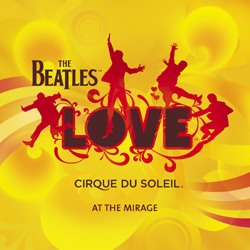
Being a Beatles fan in Australia can be an unsettling experience. I first noticed this when talking about The Beatles with an Australian girlfriend in 1999. I had assumed that, being of reasonably sound mind, she would agree with my contention that the Beatles were, in fact, avatars of the Godhead, sent by a merciful and compassionate universe to light our way through the dark valley of this existence. Something like that. Anyway, she stopped me short, sniffed and said: "I don't really rate The Beatles. The Stones were much cooler". The Stones were much cooler? Huh? Now, obviously The Stones have got some Tunes. I bow to no man in worshipping Wild Horses (that they didn't write it and I prefer The Sundays version is neither here nor there) and Gimme Shelter is colossally good, but really, come on. You don't gaze up at the Horsehead Nebula and complain that it isn't cool enough. Nor do you don't look up at the Taj Mahal and sniff that it's not hardly rock'n'roll. To do so would be point-missing on an epic scale; when things are too sublime for mere human minds to grasp, the only correct response is awe. So lay off the Beatles-hate. Let me say again: you may think that The Beatles were four pleasant chaps from Liverpool who started making beat music and then went on to take some drugs and go a bit mental. You may also think that you can fruitfully compare The Beatles to the Stones. Not so. It's not a case of comparing apples with oranges. It's more a case of comparing apples with Sublime Manifestations Of The Benevolent Godhead, sent to light our way. Got that? Good.
And yet, I've met more than a few people in the land Down Under who seem to think that The Beatles are just too weird, not rocky enough, not my cup of tea, thankyou. Why this I don't know, and is a subject for another time. The Australian Girlfriend made some noises to the effect that Australia shared with America a preferrence for blue-collar, earthy, no-frills music, not yer pretentious art-school nonsense. Which would certainly explain why bands like John Butler Trio, Something For Kate, Eskimo Joe, You Am I, [fill in revered Aussie pub rockers here. There are millions of 'em] etc. But I digress.The release of A New Beatles album should be an occasion for national rejoicing (and would drown out the Ashes crowing that's sure to turn the next coupla months into a living nightmare) but I suspect that it won't.
Love, the giant Beatles mash-up that soundtracks that latest Cirque Du Soleil extravaganza, is pretty damn awesome. Which is that least you expect from yer average Godhead. What's so good about it? Haven't we heard mash-ups before (the Grey Album, Revolved)? Sure, but none of those guys have had access to the original masters, and it's the fact that so many of the songs have been so beautifully remastered that's so cool - songs that had previously been mixed down onto an eight-track have had their constituent instruments split out and polished up, so now songs like I Am The Walrus and A Day In The Life sound reborn. A Day In The Life is especially wonderful. You can hear all the instruments in the symphonic freak-out, and the vocals after "I fell into a dream" are now startlingly clear. There's some kind of reggae breakdown in Hey Jude, with bass parts I've never heard before. As for the mash-ups, it all works astonishingly well, given how awful it could have been. Being For the Benefit Of My Kite rolls out on the psych noise of I Want You/She's So Heavy, Within Without You has been given Tomorrow Never Knows pummelling undercarriage, and there's a brand new string part written by George Martin for a demo of While My Guitar Gently Weeps.
It's all too good. I'm off to worship.
Monday, November 27, 2006
U2 Gone Poo

The very next day I went back and listened to POP, to see if maybe I had been kidding myself about its qualities. Not a bit of it. It sounds great. What's best is the quality of doubt that, again and again, can be read into Bono's lyrics. Please and Wake Up Dead Man are both pleading, questioning, confused, and are great. Last Night On Earth rocks harder than any of their later efforts, and the opening trio of songs punch hard to the solar plexus, wherever that is. Best of all though, I think, is Gone, where for once Bono seems to simply give up the preaching and retreat as if into a sensual bliss, aware that it's an abdication of his sloganeering self: "Goodbye/You can keep this suit of lights/I'll be up with sun/ I'm not coming down". An improvement on "A mole/living in a hole". And Please, while it deals with a similar subject as Sunday Bloody Sunday, is far more tortured, the cracked 'please' of the chorus an exhortation that knows it's falling on deaf ears.
All this, coming off a run of Achtung Baby, Zooropa and Passengers, were the U2 of awesome juxtapositions, of calling for pizzas and calling a beseiged Sarajevo. They embraced techno hip-hop and popular culture's dazzling contradictions and made music as big as before but this time with teeth. The worthy was always there, but the vehicle was sleek and sharp. Once they emerged from a lemon. Now they are the lemon.
Co-exist? Shove it up yer bum.
Tuesday, October 17, 2006
Burial - Burial
 I've paid almost no attention to the microgenre called Dubstep. Whenever I saw the word, I immediately turned the page, clicked away, turned off. I'm not at all sure why. Something to do with it seeming to be such a theorist's genre.
Well, that's my loss. Burial's self-titled debut album is a thing of twilit wonder, crepuscular and grainy, Ghost Town purged of all pop. I've heard mention made of Tricky's Maxinquaye, and while Burial sounds nothing at all like that album (I listened to it for the first times in ages the other day. I'd forgotten how humid, how florid it sounds), there is a similar sui generis feel, that this record is something new. On the other hand, it could be that an album this hermetically sealed will make for a very poor antecdent: We'll see.
Buy Burial from Amazon
Emily Haines & The Soft Skeleton : Knives Don't Have Your Back
 Emily Haines is a Broken Social Scene-ster, and the daughter of a noted jazz poet (I learn). Her debut album, four years in the making, is an absolute joy, although that word has a positivity that's out of place when discussing Knives; it's pretty crushingly bleak in places.
The song that really struck is the first single, Dr Blind.
If the dizzying highs
Don't subside
overnight
Dr Blind
Just prescribe
The red ones
The song is built around a kind of monumental piano (similar to Massive Attack's False Flags) and has the funereal pace of Radiohead's Exit Music, and something of that song's tightly enfolded structure and atmospheres - distant guitars, tugging strings, feedback.
Crowd Surf Off A Cliff has a repeated refrain of "I wake up lonely", followed by "Rather give the world away/Than wake up lonely". But the naked emotionalism of the album nevers seems un-earned, and that's partly because her voice is beautifully plain, allowing the lyrics to do the work, and partly because there's an atmosphere of defeated menace to the best songs ('With all the luck you've had/Why are your songs so sad?').
Which is all very annoying because it seems I should be listening to Joanna Newsom's Ys, if the feverish chatter across the interweb is anything to go by. Next time.

 Posts
Posts


